
 Kirti Jain | Publish Date: Jan 16, 2026 | Last updated: April 07, 2026
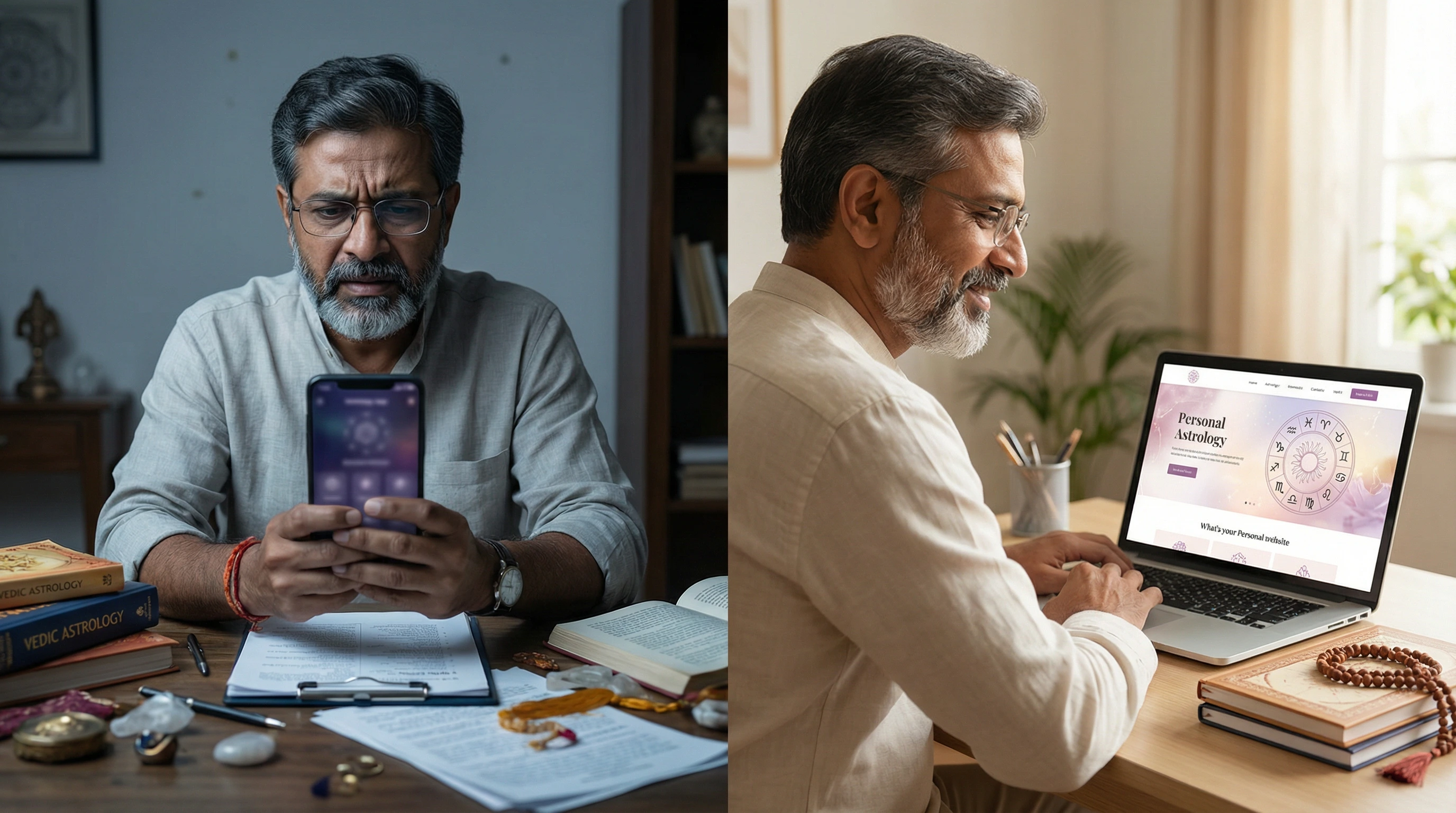
You're a practitioner with years behind you. Real clients, real results, a reputation built one conversation at a time. But somewhere underneath that consistency is a quiet unease some months are full, others go dry with no clear reason.
Enquiries are unpredictable. Growth feels fragile. That fragility has a name. It's not a marketing problem. It's a dependency problem, and most spiritual practitioners don't see it until something breaks.
Why Instagram Feels Like Growth for Astrologers But Isn't
Instagram is a rented space. You don't own the audience you've spent years building there the platform does. An algorithm designed to maximise screen time, not your bookings, decides whether 3% or 30% of your followers see your post on any given day.
That algorithm has shifted multiple times in recent years, and each time it did, practitioners who had built their entire online presence for astrologers on it felt the drop immediately. Visibility that resets every week is not a foundation it's a treadmill.
What WhatsApp Actually Is And Isn't
WhatsApp works beautifully for one thing: staying warm with people who already know you. It is not an acquisition system. When your pipeline runs through manual replies one message at a time you have built a practice that only moves when you do.
- There is no structure running in the background.
- There is no enquiry system working while you're in session, on a break, or simply offline.
- There is only you, available, or the enquiries quietly stop.
That is not how you grow an astrology business online.
How Third-Party Platforms Quietly Commoditise Your Practice
When someone opens AstroTalk, Anytime Astro, or a similar platform, they are not searching for you specifically. They are browsing a category. In that environment, the default differentiator becomes price.
We've done a full breakdown of Astrotalk vs your own website including real survey quotes from practitioners who've experienced this firsthand.
The platform owns the client relationship, sets the payout rates, and can reprioritise listings at any time without your input or warning.
You are a listing in a marketplace. That's architecturally what it is, regardless of how skilled or experienced you are. Expertise without ownership is invisible.
When Dependency Becomes Visible
Dependency doesn't announce itself. It feels manageable right up until it doesn't. It surfaces when:
- When your reach drops 40% after an algorithm update
- When a platform changes its terms and your income shifts overnight.
- When you take two weeks off and come back to find enquiries have dried up because nothing was working without you.
These aren't hypothetical risks they are documented challenges spiritual practitioners face on third party platforms every day.
By the time this surfaces, the cost of rebuilding is far higher than building a proper website for your astrologer practice earlier would have been.
What Ownership Looks Like And Why Google Changes Everything
Think of Rahu in a Kundali the planet of reach, of being found by those who don't yet know you exist. A well-built, SEO-optimised website is your Rahu in the digital world. When someone types "Vedic astrologer for career guidance" or "numerologist near me" at 11pm, someone appears in those results.
That search is a serious enquiry from a serious person already looking for your expertise. If it isn't you showing up, it becomes someone else's client not because they're better, but because they have a website that works for them.
3 Things a Website for Astrologers Does That Platforms Cannot
- Permanent Google visibility: Your website is indexed by search engines and found by people already searching for your specific expertise, not just your existing followers. This is enquiries driven by search intent, not reach.
- Full credibility in one place: Your methodology, testimonials, services, and story live together, so clients arrive already convinced before the first conversation. Depth recognised before you even speak.
- A pipeline that runs without you: Your booking process, enquiry form, and credibility are working continuously whether you're in a session, resting, or simply not online.
This Is Not About Fear. It's About Foundation.
The practitioners who feel most stable aren't the ones posting more they're the ones who stopped depending entirely on platforms they don't control. They receive fewer random DMs and more specific, pre-qualified requests. They spend less time explaining what they do because their website does it first.
Their credibility compounds over time instead of resetting with every algorithm shift. The difference between a fragile practice and a stable one usually isn't talent. It's structure and a strong online presence for astrologers starts with ownership. If you want to understand the specifics, read what actually changes after a properly built spiritual website the shifts are more concrete than most expect.
Final Thoughts
What you've built over years deserves a foundation that belongs to you not a rented profile under someone else's rules. A website for your astrologer practice is a permanent, searchable, always-on presence that reflects your depth accurately and brings aligned clients to you.
The dependency is real. The solution is ownership. The only question worth asking now is: when will you decide that your practice deserves a digital home that actually works for you?